The lab brings together counseling practice, group work, and quantitative decision methods. We ask how helping methods work in real settings and how counseling psychologists can be trained well.
Our work runs on three lines. In research, we study the process and outcomes of online counseling and therapeutic groups, and use multiple-criteria decision-making (MCDM) to address evaluation and choice problems in practice. In training, we teach courses from counseling theory, group work, and assessment to couple and family counseling and Gestalt therapy, and support counseling psychology interns. In methods, we train students in JASP statistics and MCDM so practice questions can be stated clearly and tested.
Online Counseling
Working alliance, ethics, client fit, and outcomes in video, voice, and text-based counseling.
Mindfulness-Based Horticultural Therapy Groups
Groups that combine mindfulness practice with plant care, and their effects on well-being and awareness.
Expressive Arts Therapy Groups
Group work through drawing, music, movement, and writing, with a focus on nonverbal expression and healing.
Gestalt therapy reading guide (Padlet)Password required; please contact Dr. Li-Wen Wang.
Sandplay Therapy
Using the sand tray and miniature figures to give form to inner experience through symbol and image, and the healing meaning of the sandplay process.
Unstructured Group Counseling
Groups without preset topics or activities: here-and-now interaction, group dynamics, and leader interventions.
Secondary Database Research
Using legally accessible national surveys and public databases to study counseling use, mental health, and adolescent issues, with a reproducible research workflow.
Multiple-Criteria Decision-Making (MCDM)
Building evaluation criteria and setting priorities in counseling and mental health, for example internship site quality, choice of counseling services, and program evaluation.
National Science and Technology Council (NSTC)
Building and Piloting a Shared Support Network for Community Counseling Practices: Integrating Public Help-Seeking, Psychologist Practice, and Internship Training
Causal Structure of Barriers to Counseling Help-Seeking Among University Students, Improvement Pathways, and Intervention Validation: A Hybrid MCDM Approach
Key Causal Factors of Burnout Among Elementary and Junior High School Teachers and Improvement Pathways: A Counseling Psychology Approach Using Hybrid MCDM
Teaching Practice Research Program Ministry of Education
Classroom-based studies of course design and learning outcomes in counseling and group courses.
- 2027From Member to Leader: Effects of an Unstructured-Group-Integrated Group Counseling Course on Counseling Interns’ Group Leadership Self-EfficacyDraft
Undergraduate Research Projects NSTC
Mentoring undergraduate students through NSTC student research grants, from topic to literature review to data analysis.
- 2027–2030The Effectiveness of a Short-Term Mindfulness-Based Art Group Program on Anxiety and Emotional Awareness among High-Anxiety First-Year University Students in Emerging Adulthood
董O妮 (Third-year undergraduate, Department of Psychology, Asia University)In preparation
University Social Responsibility USR
Bringing research and group practice into the community through educational travel that integrates several healing approaches.
- PlannedEducational Travel Research: Integrating Mindfulness, Horticulture, Art, Gestalt, and Group Approaches
Planned to run once per seasonPlanning
We welcome thesis topics related to the lab's research, using qualitative, quantitative, or MCDM methods.
| Year | Student | Thesis title | Status |
|---|---|---|---|
| 2026–2028 | 王O妤 | The Effects of an Expressive Arts Therapy Knitting Group on Reducing Occupational Burnout Among Elementary School Teachers | In progress |
| 2026–2027 | 江O慧 | The Impact of Teacher Burnout and Work Engagement on Quiet Quitting Behavior | In progress |
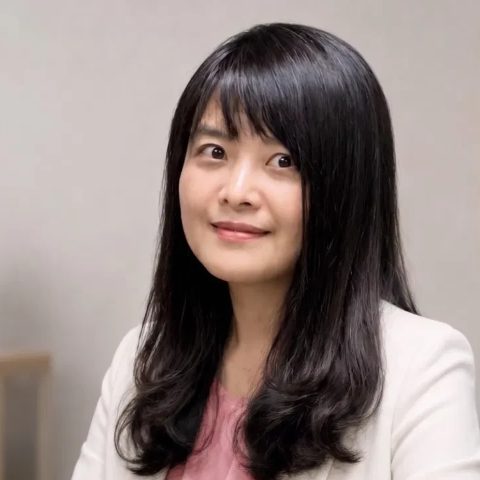
Li-Wen Wang, PhD
Licensed Counseling Psychologist · Assistant Professor, Department of Psychology, Asia University
Dr. Wang is a licensed counseling psychologist with a doctoral degree and a member of the Taipei Counseling Psychologists Association. Dr. Wang's research and teaching span online counseling, group counseling, expressive arts and mindfulness-based horticultural approaches, and quantitative research and multiple-criteria decision-making methods.
- Position
- Assistant Professor, Department of Psychology, Asia University
- Education
- PhD, Educational Psychology and Counseling, University of Taipei
- Membership
- Taipei Counseling Psychologists Association; Taiwan Group Counseling and Therapy Research Association; Taiwan Psychological Association; Expressive and Creative Arts Therapy Association of Taiwan (ECAT); Honorary Probation Officer, New Taipei District Prosecutors Office, and member of its volunteer association
- Certifications
- Certified School Counseling Supervisor, Taiwan Guidance and Counseling Association; Certified Green School Environmental Education Instructor (Ministry of Education); Gold Award Teacher and Evaluator Faculty, Ministry of Education Teaching Excellence Awards; Certified Seed Instructor, Family Skills for Drug Use Prevention (Judicial College)
- Expertise
- Online counseling, group counseling, expressive arts therapy, sandplay therapy, horticultural therapy, Gestalt therapy, MCDM
- Publications
- See publications
All articles are published in Chinese. English titles are translations.
-
2026
王麗雯、李明晉、蔡智勇(2026)。應用多準則模型建構線上團體諮商帶領之關鍵因素。教育與心理研究,49(3)。 Key factors in leading online group counseling: A multiple-criteria decision-making model. Journal of Education & Psychology, 49(3).
-
2023
王麗雯(2023)。結構取向家庭治療之個案概念化歷程探討。樹德科技大學學報,25(2)。 The case conceptualization process in structural family therapy.
-
2023
王麗雯(2023)。治療師在元宇宙諮商的機會與挑戰。育達科大學報。 Opportunities and challenges for therapists in metaverse counseling.
-
2021
王麗雯(2021)。COVID-19 危機創造線上團體治療的挑戰與機會。南亞學報。 Challenges and opportunities for online group therapy created by the COVID-19 crisis.
- liwen@asia.edu.tw
- Office
- Online classroom (Department of Psychology, Asia University). Please email to arrange a meeting.
This website shares research and teaching information only and does not provide counseling. If you are in crisis in Taiwan, call 1925 (24-hour mental health line) or 110 / 119.